


Do you feel an uncontrollable slump immediately after lunch? Do you find yourself craving salty, fatty snacks late at night after work? Or perhaps you struggle with “brain fog” even after drinking three cups of coffee?
These aren’t just willpower failures. They are biological signals that your nutritional timing is out of sync with your lifestyle.
Strategic protein intake is not just about building muscle in the gym. It is the raw material for your hormones, immune cells, and the neurotransmitters that control your mood and focus [1]. However, we all endure different stress levels and energy demands. Applying a “one-size-fits-all” diet to dynamic lives often leads to failure.
From the perspective of behavioral psychology, small, context-specific changes—Micro-habits—are far more sustainable than radical diet overhauls. Here is your blueprint for optimizing protein intake based on four common life situations.
🥗 Why You Need “Context-Specific” Protein Design
Your body processes nutrients differently depending on your circadian rhythm and stress levels. Instead of focusing solely on the amount of protein, we must focus on the timing and type. A personalized approach ensures that your nutritional intake supports your specific mental and physical demands, ultimately elevating your quality of life.
🏃♂️ 1. The Rush-Hour Commuter: “Blood Sugar Defense”
The Science Behind It Skipping breakfast or eating only carbs after a long night’s fast causes a rapid spike and crash in blood sugar. When your glucose levels plummet, your brain sends panic signals, triggering “false hunger” and leading to overeating later in the day [2]. Furthermore, prolonged fasting can force the body to break down muscle tissue for energy.
Micro-Habit Proposal Commit to consuming protein within the “Golden Window”—the first two hours after waking up.
Detailed How-to
- Time: Before leaving the house or during your commute.
- Tools: Portable containers or ready-to-drink bottles.
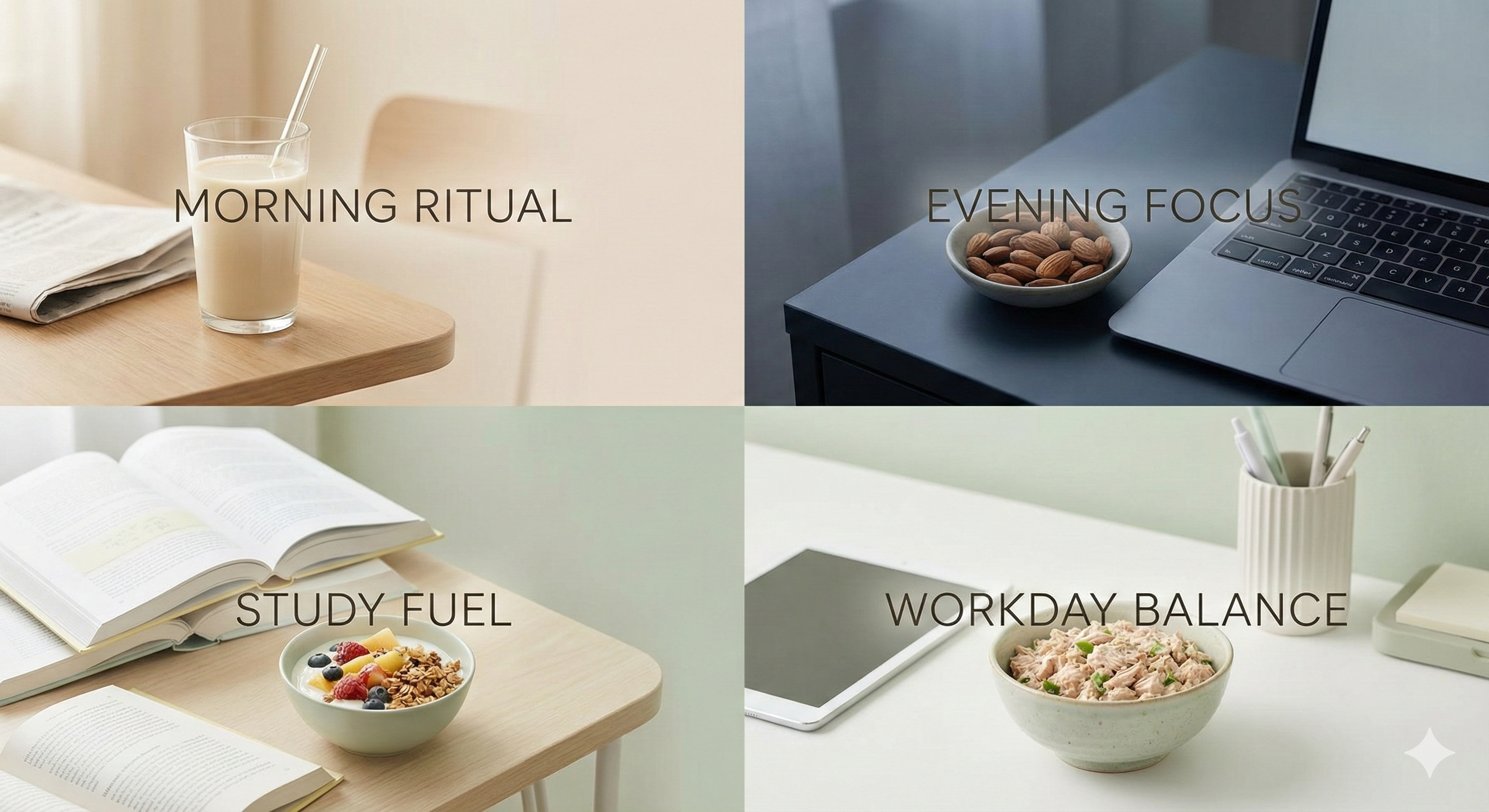
- Menu: A pre-made protein shake, two convenience store boiled eggs, or a pack of unsweetened soy milk.
Expected Effect This stabilizes your blood sugar curve for the entire day, preventing the mid-afternoon energy crash and preserving your willpower for difficult tasks.
✅ Morning Checklist
- ⬜ Did I eat protein within 2 hours of waking up?
- ⬜ Did I consume at least 15g of protein? (Approx. 2-3 eggs)
- ⬜ Did I choose a liquid or soft form to aid digestion?
🌙 2. The Late-Night Professional: “Stress Relief”
The Science Behind It Working late elevates cortisol, the stress hormone. This biological state triggers a “reward mechanism” in the brain, making you crave high-calorie, stimulating delivery foods (like fried chicken or spicy noodles). However, heavy meals disrupt deep sleep. The goal is to lower cortisol without burdening digestion [3].
Micro-Habit Proposal Switch to plant-based proteins rich in Tryptophan, a precursor to serotonin and melatonin, to aid relaxation.
Detailed How-to
- Time: At least 2 hours before your expected bedtime.
- Menu: A small handful of roasted almonds, a light tofu salad, or low-fat cottage cheese. Avoid heavy meats.
Expected Effect You satisfy the psychological need for a snack while providing the chemical building blocks for a restful night’s sleep, ensuring you wake up refreshed.
✅ Night Owl Checklist
- ⬜ Did I choose a light protein source instead of greasy meat?
- ⬜ Did I stop eating 2 hours before sleep?
- ⬜ Am I drinking enough water with my protein?
📚 3. The Student & Learner: “Brain Food” Design
The Science Behind It Although the brain accounts for only 2% of body weight, it consumes 20% of your energy. Amino acids from protein are essential for synthesizing acetylcholine and dopamine—neurotransmitters critical for memory and motivation [4].
Micro-Habit Proposal Replace high-sugar snacks with Low-GI (Glycemic Index) protein sources to prevent “sugar crashes” that ruin concentration.
Detailed How-to
- Place: Keep these on your desk or in your backpack.
- Menu: Greek yogurt (rich in probiotics for the gut-brain axis), a salmon sandwich, or a trail mix with nuts.
Expected Effect Sustained mental clarity and improved cognitive retention without the drowsiness that follows a heavy carbohydrate meal.
✅ Focus Checklist
- ⬜ Did I choose a protein snack over a sugary treat?
- ⬜ Did I eat a moderate amount to avoid “food coma”?
- ⬜ Does my meal include Choline (found in eggs/salmon) for memory? [5]
🏠 4. The Remote Worker: “Metabolism Booster”
The Science Behind It Working from home eliminates commute time, drastically reducing NEAT (Non-Exercise Activity Thermogenesis). This sedentary pattern risks muscle atrophy and visceral fat accumulation. Protein has a high “Thermic Effect of Food” (TEF), meaning your body burns more calories digesting it compared to fats or carbs.
Micro-Habit Proposal Distribute your protein intake evenly throughout the day to keep your metabolism active, rather than eating it all at dinner.
Detailed How-to
- Strategy: Aim for 20g of protein every 3-4 hours.
- Menu: Canned tuna (oil drained), canned chickpeas, or pre-cooked chicken breast cubes. Keep it simple so prep time is under 5 minutes.
Expected Effect Maintains muscle mass despite lower activity levels and keeps satiety high, preventing constant snacking from the home pantry.
✅ Home Office Checklist
⬜ Am I spreading intake (approx. 20g) across every meal? [1]
⬜ Do I have “5-minute prep” ingredients stocked?
⬜ Do I do a light stretch after eating to aid synthesis?
💡 [Conclusion] Your First Micro-Habit Starts Now
Building a healthy body doesn’t require a New Year’s resolution or a restrictive diet plan; it starts with simply changing the snack currently in your hand. Strategic protein intake is about making one small, intelligent choice that aligns with your current situation.
Choose just one checklist from the scenarios above that fits your life today. That single small change will compound, completely transforming your energy levels and condition by tomorrow afternoon.
🔎 Sources
- British Nutrition Foundation: Protein Nutrition Information – A guide to protein functions in the body and recommended intake.
- Healthline: 10 Science-Backed Reasons to Eat More Protein – How protein impacts appetite control and metabolism.
- IntelyCare: 10 Healthy Snacks for Night Shift Workers – Stress-relief snack strategies for late workers.
- National University: Best Brain Foods for Studying – Information on protein and nutrients for cognitive function.
- NightOwling: Healthy Meal Plan For Night Shift Workers – The relationship between nutrient timing and circadian rhythms.
댓글 남기기